Understanding Transformer Bushings
Transformer bushings are critical components designed to safely guide electrical conductors through a grounded transformer casing, providing both mechanical support and electrical insulation. Essentially, they allow high-voltage electricity to pass into or out of a transformer without making contact with the grounded enclosure, preventing dangerous faults. Think of them as protective gateways that shield the transformer from electrical stress and environmental conditions. Without properly functioning bushings, there’s a heightened risk of short circuits, flashovers, or even severe equipment damage. Available in various types—such as porcelain, resin, or oil-filled—transformer bushings are carefully selected based on voltage levels, operating conditions, and system requirements to ensure safe and reliable power transmission.
Transformer bushings are critical in the safe and reliable operation of electrical transformers. They provide an insulated pathway for high-voltage electrical conductors to move through the grounded transformer tank. Without them, transformers could not run reliably or safely.
In this article, we discuss types of transformer bushings, their purpose, and their importance to help readers understand power systems.
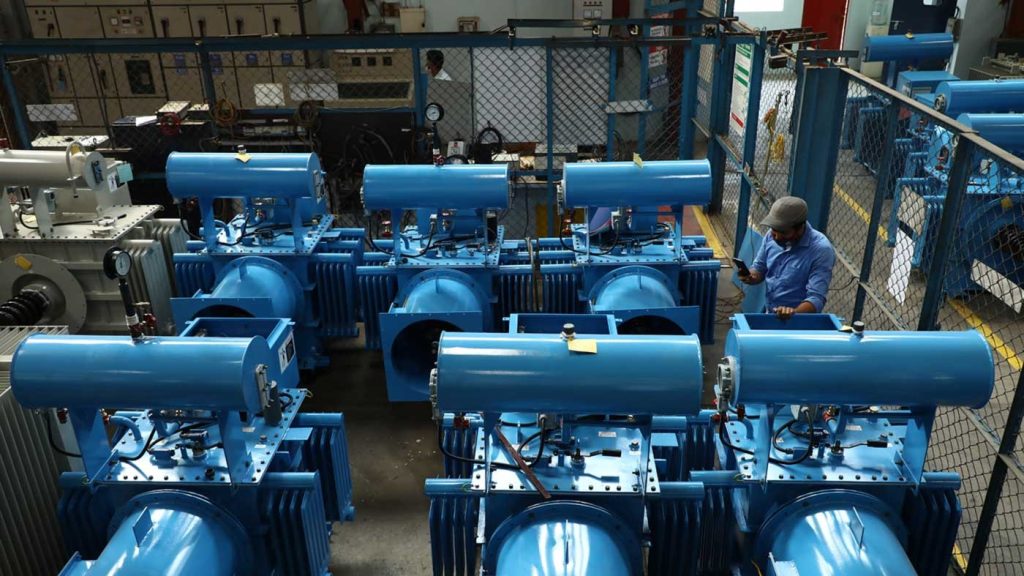
There are various types of transformer bushings, each applied to multiple applications.
The most general types include:
1. Oil-impregnated paper (OIP) Bushings
Made of paper insulation saturated with oil.
They are well-suited for high-voltage applications due to their superior insulation properties.
Used in power transformers and substations.
2. Resin-impregnated paper (RIP) Bushings
As in OIP bushings, they use resin instead of oil for insulation.
They are also environmentally friendlier because they exclude the potential for oil leaks.
Provide superior performance and strength in demanding conditions.
3. Resin-Bonded Paper (RBP) Bushings
It is manufactured using paper and resin bonding.
Specially designed for medium-voltage.
It is economical but less durable than RIP or OIP bushings.
4. Ceramic Bushings
They are constructed of porcelain and commonly applied to low and medium-voltage systems.
They are highly resistant to environmental conditions like moisture and pollutants.
5. as-insulated Bush
Use sulfur hexafluoride (SF6) gas for insulation
Ideal for high-voltage, compact designs such as gas-insulated substations.
It is low maintenance and highly reliable.
Transformer bushings serve various significant functions in electrical systems:
Electrical Insulation – Prevents electrical failures and offers safe power transmission.
Structural Support – It provides a strong and secure interconnection of transformer components.
Leakage Prevention – Prevents leaks of oil or gas in transformers, which facilitates proper functioning.
Voltage Regulation – It ensures steady voltage levels within the electrical system.
Transformer Bushings Significance
Transformer bushings are of great importance. Here is why:
✔ Safety First – Proper insulation eliminates dangerous electrical faults and short circuits.
✔ Efficient Operation – Make sure transformers run without power loss or heating.
✔ Long equipment life – It extends equipment life and reduces wear and tear.
✔ Cost Savings – Prevents failures that can lead to repair or replacement costs.
In Essence
Transformer bushings are critical in power systems, assuring safety, efficiency, and reliability. Based on voltage levels and environmental circumstances, the right kind of transformer bushing can remarkably enhance the transformer’s performance and life.
Need assistance with transformer components? For high-quality transformer bushings and expert advice, contact us today!